
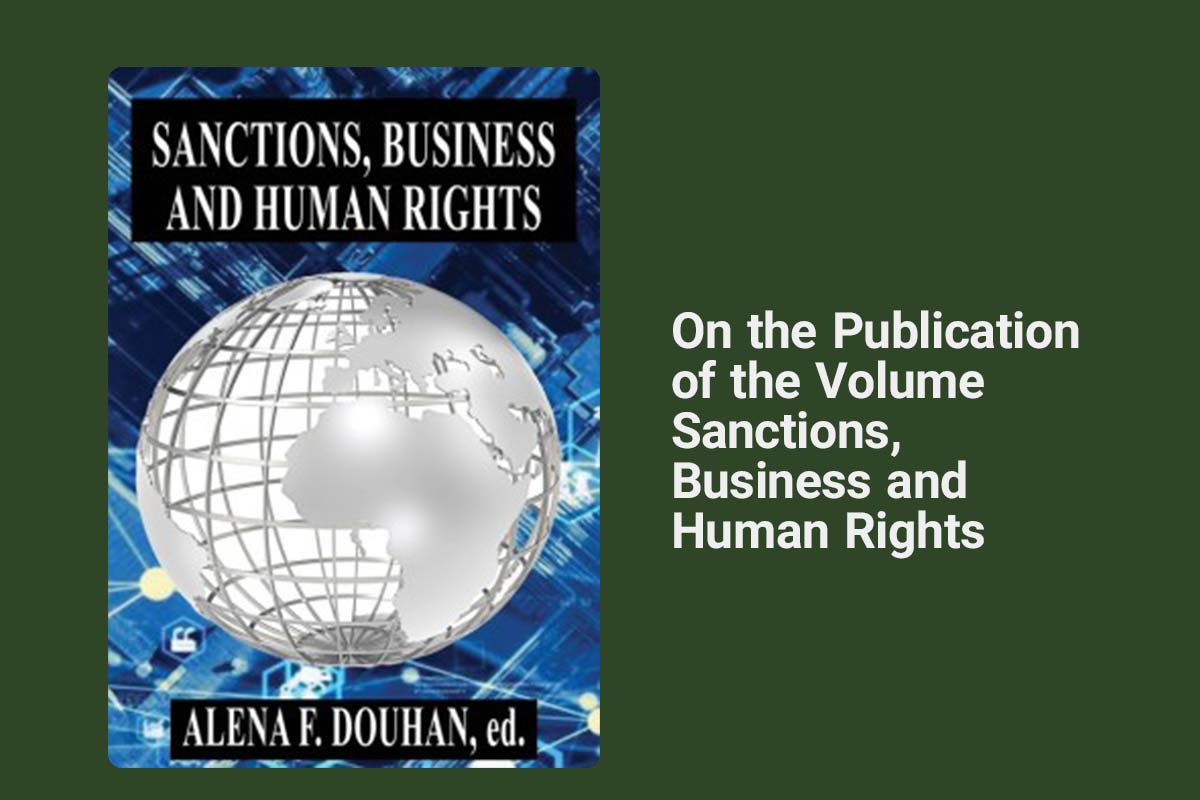
This post presents a shortened version of the remarks delivered on 15 September 2025 at a side event of the 60th Session of the UN Human Rights Council in Geneva, hosted by the Permanent Mission of the Republic of Belarus.
Traditionally, in international law, states and intergovernmental organizations have been regarded as the principal subjects, vested with rights and obligations. This, of course, meant that international legal duties were not directly imposed on non-state actors, since they were not the lawmakers of the system. Non-state entities could only benefit from rights conferred upon them by international law, but they were not generally burdened with obligations. This is why we speak so often about human rights in international law, but we rarely, hear about human obligations. Some scholars have indeed explored the issue (see e.g.: here), but overall, individual obligations are far more firmly anchored in domestic legal systems than in treaties or customary international law.
Corporations—especially multinational corporations—have long benefited from this asymmetry. For example, in the field of international investment law, and particularly in bilateral investment treaties, foreign investors and companies have enjoyed extensive protections, often without assuming any corresponding obligations. As a result, when investing in poor countries, many corporations have shown disregard for human rights, labor standards, and environmental protections. Sadly, their track record includes numerous violations in all these areas. (See e.g.: here)
This imbalance—between the rights and protections granted to corporations on one hand, and the absence of binding obligations on the other—combined with the troubling record of certain corporations, has sparked an ongoing debate among international legal scholars. For several decades now, there has been a growing movement to establish binding obligations for business enterprises under international law. Initially, led largely by scholars from developing countries, the concept of corporate social responsibility emerged, placing moral—rather than legal—duties on corporations (see: here). The United Nations joined this discourse through the launch of the Global Compact, a platform enabling companies to voluntarily commit themselves to respect human rights, labor standards, and environmental protections. (here)
Building on this momentum, John Ruggie, as the UN Secretary-General’s Special Representative, introduced the UN Guiding Principles on Business and Human Rights (here). His aim was to lend a quasi-legal dimension to the otherwise voluntary notion of corporate social responsibility. The “Ruggie Principles” received wide recognition and laid the groundwork for the Human Rights Council’s establishment of a working group tasked with drafting a binding treaty—a process that continues today.
While positive, enforceable obligations are still not directly imposed on corporations, there is now a growing consensus that corporations must at least accept negative obligations: they must not engage in actions that result in violations of human rights, labor rights, or environmental protections.
Of course, such a general principle requires more detailed elaboration. The Human Rights Council’s working group has taken important steps in this regard, relying on the well-established principle of due diligence. At its core, due diligence reflects the simple idea that no person or entity may pursue its own goals or exercise its rights in a way that harms the rights of others. (See: here)
This principle is enshrined in virtually all national legal systems, and more recently, several states—particularly in Europe—have incorporated it into their commercial laws as binding duties on companies. (See: here) At the national level, lawsuits have been filed against corporations for failing to uphold this obligation, the most notable being the high-profile case against Shell in Dutch courts (see: here). Similarly, in investment disputes between host states and foreign investors, arbitral tribunals are increasingly recognizing investor obligations based on the principle of due diligence. (See: here)
Having these developments in mind, Professor Alena Douhan, the UN Special Rapporteur on the negative impact of unilateral coercive measures, has made an invaluable contribution by linking the ongoing work on corporate due diligence with the pressing issue of unilateral sanctions. This is both a strategic and realistic approach. In practice, the enforcement of unilateral sanctions depends heavily on the conduct of private companies. The very trade and financial transactions that sanctioning states aim to restrict are carried out through corporations. If companies, relying on their due diligence obligations, refuse to implement such sanctions, the objectives of the sanctioning state cannot be achieved.
The Guiding Principles on Sanctions, Business, and Human Rights—finalized and published in 2025 by the Special Rapporteur—make this point explicitly. Article 24, paragraph 1, states:
“As unilateral coercive measures are illegal under international law, businesses shall challenge their implementation and enforcement by all available legal means.”
This provision does not offer a suggestion; it establishes a legal duty. It calls upon corporations not to implement sanctions, because sanctions of this nature are inconsistent with international law. By invoking the principle of due diligence—which, as I noted, is now widely recognized as binding on corporations—the Special Rapporteur makes clear that companies must not contribute to violations of international law or human rights by enforcing unilateral sanctions. In practice, this requires corporations to assess both the legality and the human rights impacts of sanctions before complying with them, and to refrain from implementing those that are unlawful or that would undermine their duty of care.
This approach is both important and impactful. If sufficiently recognized and applied, it could mark a turning point in the effort to curb the unlawful use of unilateral coercive measures. It is from this perspective that the book Sanctions, Business, and Human Rights, carries such importance. In this volume, numerous scholars and experts critically engage with and ultimately endorse the central ideas articulated by Professor Douhan in the Guiding Principles, and I am delighted to add my contribution to this significant scholarly development. The publication of this volume demonstrates that the Special Rapporteur’s vision—namely, that corporations bear a duty not to comply with unlawful unilateral coercive measures, nor to engage in “over-compliance”—is shared and supported by many leading voices in the field.
The production of academic literature on unilateral sanctions, their impact on human rights, and their legal deficiencies under international law is itself a major achievement—one of Professor Douhan’s most enduring contributions. This book is a clear testament to that achievement. (See also: here)
This post seeks to honor this valuable contribution and to acknowledge with appreciation the dedication that enabled its realization.
Author: Pouria Askary – Associate Professor of International Law, Allameh Tabataba’i University (ATU), Tehran, Iran



Thanks for your essay. It was informative.
Thanks, Reza. We appreciate your kind comment.