Introduction: The Epistemological Strategy of “Baqir al-Ulum”
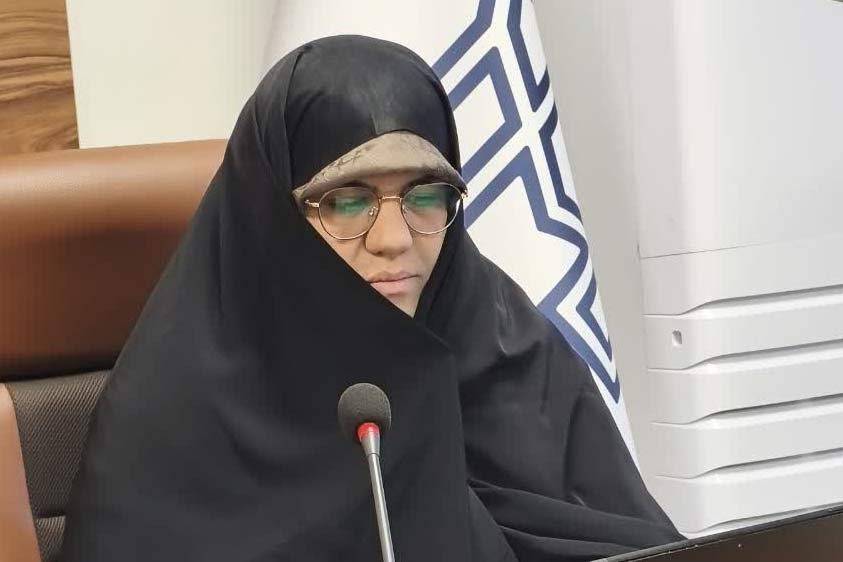
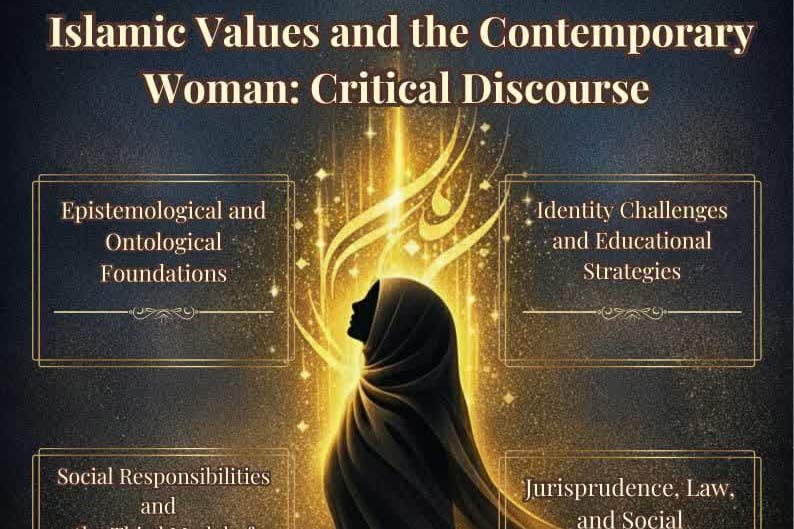
On December 22, 2025, a date coinciding with the birth of Imam Muhammad al-Baqir (as)—historically revered as “Baqir al-Ulum” or the “Splitter of Knowledge”—Allameh Tabataba’i University (ATU), in a strategic partnership with Al-Farabi Kazakh National University, convened a landmark international seminar titled “Islamic Values and Contemporary Woman: A Critical Discourse on Challenges and Solutions.” As articulated by Dr. Fatemeh Fallah Tafti, the Scientific Chair of the seminar, the invocation of “Baqir al-Ulum” was not merely a ceremonial gesture but an “epistemological strategy.” It represented a commitment to piercing through the superficial layers of contemporary gender discourse to reach the “core of meaning” regarding Muslim womanhood. Supported by the ATU Vice-Presidency for Research and the Directorate of International Relations, this event sought to dismantle the crisis of identity facing women in the Islamic world by proposing a native, rational, and revelatory framework.
The Civilizational Pivot: Beyond Static Traditions and Rootless Modernity
The central thesis of the seminar was that the “woman question” is the pivot of the modern human civilizational geometry. The scholars argued that contemporary women are caught in a destructive dichotomy: on one side, “static and frozen traditions” that marginalize women through cultural prejudices, and on the other, a “rootless modernity” that offers inclusion at the high price of spiritual and ontological authenticity.
The seminar proposed the “Third Paradigm” as a vital alternative. This paradigm moves beyond the “mechanical competition” of secular feminism and the “social withdrawal” of isolationism. It redefines a woman’s dignity as a whose presence in the public square is not a secondary concession but a fundamental requirement for a healthy society. Within this model, original Islamic values act as the highest ethical support for agency in science, politics, and social reform.
Panel I: Ontological Foundations and Globalization
The first session, led by Dr. Faezeh Azimzadeh Ardebili and Dr. Zhanna Orynbassarovna Kantarbayeva, engaged in a high-level deconstruction of how globalization affects the Muslim female psyche. This panel went beyond surface-level issues to discuss the “ontological insecurity” created by the standardized global culture. The scholars argued that globalization often acts as a neo-colonial tool that attempts to de-spiritualize the female identity. Dr. Arailym Shanbayeva contributed a critical perspective on how contemporary Muslim women must navigate their identity in a world that demands a choice between “religious seclusion” and “secular assimilation.” The conclusion was clear: women must return to the ontological dignity of the human person provided by the Quranic worldview, which recognizes woman not as a “secondary being,” but as an independent spiritual entity capable of transforming the public sphere.
Panel II: Pedagogical Strategies and Conscious Agency
The second panel shifted focus toward the educational mechanisms required to nurture the “Third Model.” Dr. Nikoo Dyalameh and Dr. Anar Bektebayevna Mukashova explored the intersection of Islamic ethics and modern pedagogy. This session was a breakthrough in discussing “Social-Pedagogical Work” not just as a remedial tool but as a proactive strategy. The panel advocated for a reason-oriented religious upbringing that allows women to internalize faith through intellectual conviction. By fostering this “conscious agency,” the education system can produce women who excel in the scientific and professional world without compromising the sanctity of the family. The pedagogical shift proposed here is one that moves from “passive imitation” to “active intellectual engagement,” ensuring that the modern Muslim woman is the architect of her own destiny.
Panel III: Dynamic Jurisprudence and Modern Social Transformation
Chaired by Dr. Mohammad Taghi Karami Gahi, the third panel was a rigorous exploration of legal theory. Dr. Mahmoud Hekmatnia elaborated on the concept of Dynamic Jurisprudence (Fiqh al-Mu’asir) as a necessary response to the complexities of the 21st century. The discussion focused on how Islamic law can adapt to “Emerging Challenges” such as digital labor rights, female entrepreneurship, and international social law. Prof. Ainura Durbelenovna Kurmanaliyeva enriched the session with her research on “Wise Women” in Kazakh history, proving that historical Islamic traditions in Central Asia have always recognized the intellectual and social leadership of women. The panel concluded that “Wise Justice” (al-‘Adala al-Hakima) is the key to balancing the inherent biological and spiritual uniqueness of women with their right to total social participation.
Panel IV and Regional Synergy: Media Representation and Social Responsibility
The final panel, featuring Dr. Saleh Hassanzadeh and Prof. Kalimash Kapsamarovna Begalinova, addressed the “Image of Muslim Women in Media.” They dismantled the binary stereotypes often perpetuated by both Western media and extremist narratives. The panel argued that the Islamic Social Model must be proactively marketed through “Positive Representation Strategies.” The synergy between Iranian and Kazakh perspectives, facilitated by Dr. Salehi Moteahhed, demonstrated that regional cooperation is vital to creating a unified front against global misrepresentations. This synergy is not just about academic exchange but about building a shared civilizational narrative that honors the role of women in family, community, and nation-building.
The Manifesto of the Third Paradigm: A Concluding Vision
In her closing address, Dr. Fatemeh Fallah Tafti synthesized the seminar’s findings into a three-pillar manifesto:
- The Sovereignty of Revelatory Reading: Breaking identity crises requires a return to authentic readings of the Quran and Sunnah, where women are recognized as primary actors in building a new civilization.
- Organic Integration: Rejecting the false choice between family and society; instead, fostering a “dynamic link” where domestic excellence and professional authority reinforce one another.
- Wise Justice (al-‘Adala al-Hakima): Achieving a justice that respects the ontological uniqueness of women while ensuring their full participation in all spheres of life, governed by the requirements of dynamic Islamic law.
Conclusion: The Foundation of a Permanent Secretariat
The ATU-Al-Farabi seminar concluded as the foundation of a permanent international secretariat dedicated to the study of the “Third Paradigm.” By “splitting the core” of traditional and modern prejudices, this seminar has laid the intellectual groundwork for a future where the voice of the Muslim woman remains a cornerstone of global civilizational dialogue.
Keywords: Islamic Values, Contemporary Woman, Third Model, ATU-Al-Farabi Seminar, Gender Justice, Dynamic Jurisprudence.
Author:
Fatemeh Fallah Tafti, Associate Professor of the Department of Islamic Jurisprudence and Law, and the Scientific Chair of the Seminar, Faculty of Theology and Islamic Knowledge, Allameh Tabataba’i University.